
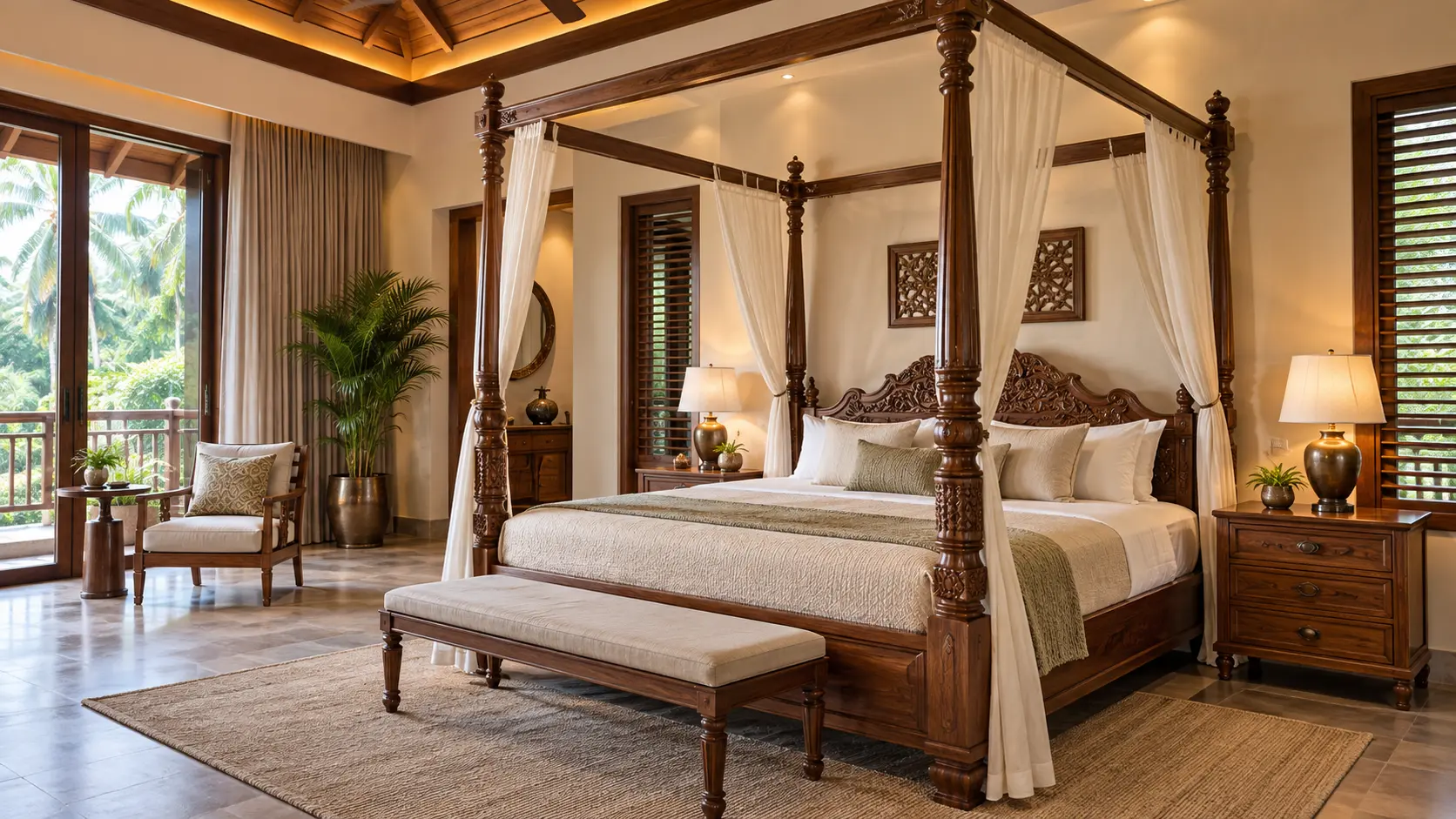
When you walk into a bedroom with a four poster bed, something shifts. The room feels anchored, intentional, and quietly luxurious. Poster beds have survived centuries of changing design trends because they do more than provide a place to sleep. They create a focal point that defines the entire space.
For homeowners in Pune looking to invest in bedroom furniture that balances heritage with contemporary living, a teak wood poster bed offers exactly that sweet spot. The vertical posts add architectural interest without overwhelming smaller rooms, while the natural durability of sagwan wood ensures your bed becomes a family heirloom rather than a temporary purchase.
What Makes a Poster Bed Different
A poster bed is defined by four vertical columns, one at each corner of the bed frame. These posts rise upward and typically terminate in decorative caps called finials. Unlike canopy beds, traditional poster beds do not have an overhead frame connecting the posts at the top. This distinction matters because it affects both the visual weight of the bed and the ceiling height required in your bedroom.
The four poster bed design originated in medieval Europe, where wealthy households used draped fabrics between the posts to create privacy and retain warmth in unheated stone bedrooms. Today’s modern poster bed retains the structural elegance of those historical designs while adapting to contemporary Indian homes where air circulation and open sightlines are priorities.
Four-poster beds are easier to maintain than full canopy beds since you do not need to clean fabric drapes, and they allow for better airflow around the sleeping area. This makes them particularly suitable for Pune’s climate, where humidity levels fluctuate between monsoon and summer seasons.
Why Teak Wood Remains the Gold Standard for Poster Beds
When selecting material for a poster bed that will serve as the centerpiece of your bedroom, teak wood stands apart from other hardwoods available in the Indian market. Teak contains natural oils and silica that make it resistant to moisture, termites, and fungal decay. These properties are not marketing claims but documented characteristics of the wood itself.
Teak furniture can last 80 to 100 years or more with minimal maintenance when used indoors. Compare this to sheesham wood, which typically lasts 25 to 50 years and requires oiling every six months plus annual polishing. Teak needs oiling only once a year and simple wiping for routine cleaning.
The natural oil content in sagwan wood also means it does not warp or crack easily when exposed to temperature and humidity changes. For Pune households that experience distinct seasonal shifts, this stability translates to a bed frame that maintains its structural integrity and appearance decade after decade.
Cleaning is straightforward. Dust weekly with a soft cloth and clean spills immediately. For deeper cleaning, use mild soap and water. To restore luster, apply teak oil or natural wood conditioner every 6 to 12 months, especially during dry seasons. This low-maintenance requirement makes teak wood poster beds practical for busy professionals and growing families alike.
Traditional Poster Bed Designs for Contemporary Indian Homes
The term traditional poster bed often conjures images of heavily carved Victorian-era furniture with ornate detailing throughout. While those designs remain popular in heritage homes and luxury properties, modern Indian manufacturers have adapted the poster bed concept to suit contemporary aesthetics.
Today’s traditional poster bed options range from minimally carved designs with clean lines to moderately detailed frames featuring subtle floral or geometric motifs. The key is proportion. A well-designed poster bed for a modern Pune apartment should have posts that feel substantial without dominating the room visually.
Finial designs at the top of each post offer an opportunity to inject personality. Some homeowners prefer simple rounded or squared finials that blend seamlessly with minimalist decor. Others opt for turned wood finials with gentle curves that echo traditional craftsmanship without appearing dated.
The bed frame itself can be platform-style with a low-profile base, or it can include a raised panel design with storage drawers underneath. Both approaches work within the poster bed category, allowing you to prioritize either sleek aesthetics or practical storage based on your bedroom layout.
Styling a Modern Poster Bed in Your Bedroom
The vertical emphasis of a four poster bed creates natural opportunities for creative styling. Because the posts draw the eye upward, you can use this visual pathway to enhance the overall design of your bedroom.
Start with bedding. Crisp white or neutral-toned linens allow the wood grain of your teak wood poster bed to remain the star. If you prefer color, choose deep jewel tones like emerald, navy, or burgundy that complement the warm honey-brown hues of aged teak. Avoid overly busy patterns that compete with the architectural presence of the posts.
Lighting plays a crucial role. Hang pendant lights or a small chandelier between the posts if your ceiling height allows. Alternatively, place table lamps on bedside tables positioned just outside the footprint of the bed frame. The posts will naturally frame these light sources, creating a cozy, intimate atmosphere in the evening.
Wall decor should be kept minimal on walls adjacent to the bed. The poster bed itself provides sufficient visual interest. A single large piece of artwork or a mirror on the wall opposite the bed will reflect light and make the room feel more spacious without creating visual clutter.
For flooring, area rugs positioned partially under the bed help anchor the furniture within the room. Choose rugs in natural fibers like jute or wool in neutral tones that do not fight for attention with the bed frame.
Space Planning and Ceiling Height Considerations
One practical concern when choosing a modern poster bed is ceiling height. Standard bedroom ceilings in Pune apartments typically range from 9 to 10 feet. A well-proportioned poster bed should have posts that extend 6 to 7 feet above the mattress surface, leaving at least 2 to 3 feet of clearance between the finials and the ceiling.
This clearance prevents the bed from feeling cramped or oppressive. It also ensures adequate air circulation above the sleeping area, which contributes to comfort during Pune’s warmer months.
If your bedroom has lower ceilings or sloped roofs, consider a poster bed with slightly shorter posts or one where the finials are integrated into the post design rather than adding significant additional height. The visual effect of four vertical elements remains intact even with reduced post height.
Room dimensions matter too. A king-size poster bed requires a bedroom of at least 12 by 14 feet to allow for comfortable movement around all sides. For smaller rooms, a queen-size poster bed with a more compact footprint can deliver the same aesthetic impact without overwhelming the space.
Comparing Poster Beds with Other Bed Frame Styles
Understanding how a four poster bed differs from other popular bed frame styles helps clarify whether this is the right choice for your bedroom.
Platform beds sit low to the ground with a solid base and no headboard or posts. They work well in ultra-modern interiors but lack the vertical drama and focal-point quality of a poster bed. Panel beds feature a prominent headboard and sometimes a matching footboard, but no corner posts. They offer a more subdued presence suitable for traditional or transitional decor.
Canopy beds include an overhead frame connecting the four posts, designed to support fabric drapes. While visually striking, canopy beds require higher ceilings and more maintenance due to fabric cleaning. The main difference between canopy beds and four-poster beds is that canopy beds are covered by material draped over the top of the posts, while four-poster beds remain uncovered from the top.
Upholstered beds feature padded headboards covered in fabric or leather. They add softness and texture but do not provide the architectural structure that a teak wood poster bed brings to a room.
For homeowners seeking a balance between visual impact and practical maintenance, the poster bed occupies a distinctive middle ground. It offers more presence than a platform or panel bed without the complexity of a full canopy design.
Investment Value and Long-Term Durability
A quality teak wood poster bed is not an impulse purchase. Pricing for solid teak beds in India typically ranges from Rs. 60,000 to over Rs. 1,00,000 depending on size, design complexity, and finish. This places poster beds in the premium segment of bedroom furniture.
However, when evaluated as a long-term investment, the value proposition becomes clear. A teak poster bed that lasts 80 years or more effectively costs less per year of use than a cheaper engineered wood bed that needs replacement every 10 to 15 years.
Beyond pure economics, there is the matter of heritage. Solid wood furniture develops character over time. The patina that forms on teak through years of use and care cannot be replicated artificially. Many families pass down teak beds through generations, with each generation adding its own layer of history to the piece.
For Pune homeowners planning to stay in their current residence long-term, or those who intend to eventually pass furniture to children, a teak wood poster bed represents both a practical purchase and an emotional investment in family continuity.
Common Mistakes to Avoid When Buying a Poster Bed
Several pitfalls can undermine your satisfaction with a poster bed purchase. Being aware of these common errors helps you make a more informed decision.
First, do not sacrifice solid wood construction for a lower price. Some manufacturers offer poster beds made from engineered wood with teak veneer. While these may look similar initially, they lack the structural durability and longevity of solid sagwan wood. Veneer can peel or chip over time, and engineered wood cores are more susceptible to moisture damage.
Second, avoid choosing a poster bed that is disproportionately large for your bedroom. The vertical posts amplify the visual footprint of the bed. A king-size poster bed in a 10 by 10 foot room will feel overwhelming regardless of how beautiful the craftsmanship is. Measure your space carefully and consider creating a floor plan before committing to a size.
Third, do not ignore the quality of joinery. Inspect how the posts connect to the bed frame. Dovetail joints, mortise-and-tenon connections, and reinforced corner blocks indicate quality construction. Screws and cheap metal brackets suggest corner-cutting that will compromise stability over time.
Finally, verify the finish. Natural teak oil finishes allow the wood to breathe and age gracefully. Thick polyurethane coatings may look glossy initially but can crack or yellow with age, requiring expensive refinishing.
Maintenance Tips to Preserve Your Poster Bed’s Beauty
Proper care extends both the appearance and lifespan of your teak wood poster bed. The good news is that maintenance requirements are modest compared to other hardwoods.
Dust the posts and frame weekly using a soft, dry cloth. This prevents dust accumulation in carved details and maintains the wood’s natural sheen. For routine cleaning, dampen a cloth with water and a small amount of mild dish soap. Wipe along the grain, not across it, to avoid micro-scratches.
Spills should be blotted immediately with a dry cloth. Teak’s natural oils provide some water resistance, but prolonged moisture exposure can still cause staining or water marks.
Every 6 to 12 months, apply a thin layer of teak oil or natural wood conditioner. Use a soft cloth to spread the oil evenly along the grain, allow it to penetrate for 15 to 20 minutes, then buff off any excess with a clean cloth. This replenishes the wood’s natural oils and maintains its warm color.
Avoid placing your poster bed in direct sunlight for extended periods. UV exposure can cause uneven fading over many years. If your bedroom receives strong morning or afternoon sun, consider using curtains or blinds during peak hours.
Do not use harsh chemical cleaners, abrasive scrubbers, or furniture polishes containing silicone. These can damage the wood’s surface or create buildup that dulls the natural finish over time.
Why Pune Homeowners Are Choosing Traditional Designs in Modern Homes
Pune’s furniture preferences reflect the city’s unique position as a blend of heritage and rapid urban development. Many homeowners in areas like Kothrud, Baner, Viman Nagar, and Koregaon Park are furnishing newly constructed apartments and independent homes with designs that honor traditional craftsmanship while fitting contemporary lifestyles.
The poster bed fits this ethos precisely. It carries historical weight without feeling museum-like. The four vertical posts reference centuries of furniture design, yet the clean lines of modern interpretations align with current interior design trends favoring simplicity and functionality.
Local climate considerations also play a role. Pune’s moderate temperatures and distinct seasonal shifts mean furniture must handle varying humidity levels without warping or cracking. Teak wood’s natural resistance to these environmental changes makes it a pragmatic choice beyond its aesthetic appeal.
Additionally, Pune’s strong Marathi cultural identity values furniture that can serve multiple generations. A solid teak poster bed purchased today can realistically become part of a family’s heritage, passed down to children or grandchildren. This intergenerational perspective influences purchasing decisions in ways that differ from more transient urban markets.
Making the Right Choice for Your Bedroom
Selecting a poster bed involves balancing aesthetics, space constraints, budget, and long-term goals. Start by defining your priorities. Is visual impact your primary concern, or do you need integrated storage? Do you prefer minimal ornamentation or traditional carving details?
Visit showrooms where you can physically inspect the quality of construction. Sit on display models to assess stability. Examine joinery, finish quality, and the weight of the frame. A well-built teak poster bed should feel substantial and solid, not hollow or lightweight.
Consider your existing bedroom decor. If you already own other teak furniture, a matching poster bed creates cohesion. If your room features mixed materials, a teak wood poster bed can serve as an anchor piece that ties together diverse elements through its warm wood tones.
Think about your future plans. If you anticipate moving within a few years, ensure the poster bed will fit in potential new homes. Standard doorways in Indian apartments are typically 3 feet wide, which accommodates most disassembled bed frames, but very large or intricately designed poster beds may present challenges during relocation.
Finally, trust your instincts. A poster bed is a statement piece that you will live with every day. It should bring you satisfaction each time you enter the bedroom, not just when guests visit. Choose a design that resonates with your personal sense of beauty and comfort.
FAQs
What is the difference between a poster bed and a canopy bed?
A poster bed has four vertical posts at each corner without an overhead frame connecting them. A canopy bed includes horizontal rails at the top that connect the posts, designed to support fabric drapes. All canopy beds are technically four-posters, but not all four-poster beds are canopy beds.
Is teak wood better than sheesham for a poster bed?
Yes, teak wood offers superior durability, moisture resistance, and requires less maintenance than sheesham. Teak can last 80 to 100+ years with minimal care, while sheesham typically lasts 25 to 50 years and needs more frequent oiling and polishing.
What ceiling height do I need for a four poster bed?
Ideally, your bedroom ceiling should be at least 9 feet high. The bed posts typically extend 6 to 7 feet above the mattress, and you need 2 to 3 feet of clearance between the finials and the ceiling for proper proportions and air circulation.
Can a poster bed work in a small bedroom?
Yes, if you choose the right size. A queen-size poster bed with slender posts can work in rooms as small as 10 by 12 feet. Avoid overly ornate designs that add visual bulk, and keep surrounding decor minimal to prevent the room from feeling cramped.
How often should I oil my teak poster bed?
Apply teak oil or natural wood conditioner every 6 to 12 months, depending on your local climate and how much direct sunlight the bed receives. In dry seasons or sunny rooms, oiling every 6 months helps maintain the wood’s luster and prevents drying.
Ready to Transform Your Bedroom
A well-chosen poster bed becomes more than furniture. It becomes the foundation of your bedroom’s character, a daily reminder of quality craftsmanship, and potentially a piece your family will treasure for generations.
Explore our collection of handcrafted teak wood beds and storage solutions to find the perfect poster bed for your Pune home. Browse our bedroom furniture range and discover designs that blend traditional elegance with modern living.
For personalized assistance or to discuss customization options, contact our team directly. We are available weekdays from 10 am to 6 pm to help you select the ideal poster bed for your space.
Visit our complete product catalog to explore the full range of sagwan furniture options available for your home.